Sunday, April 24, 2011

Are Students Being Provided with the Resources Needed for their Academic Studies?

On January 8, 2002 President Bush passed the No Child Left Behind Act to improve students progress, provide full benefits, and improve teacher qualifications. To improve student progress, schools are required to provide free tutoring and all the benefits needed to enhance their education. It also requires teachers to be highly qualified for the subject they are going to be teaching. Title 1 schools, include a great percentage of disadvantaged students which is the main focus on the No Child Left Behind Act, to try to improve their education.
The article “No Child Left Behind” in the Education Week states, “Federal officials have pointed to increase in Title 1 spending and new money to pay for testing as evidence of the government’s financial commitment to the law.” This Act requires schools to provide all the resources the students need to keep up their grades in school. The article also states schools are required to provide the best education possible, which means teachers are required to be highly recommended with their teaching abilities. If these requirements are not met, students are given the choice to switch to another school or private tutoring. This is a big help to some students, but many schools do not provide the resources kids need to do homework or get ahead in class work. For example, in my school there is a limit on how much paper anyone can use in one day. School officials say it is because of the lack of resources. According to the Act our is school is currently failing to meet the requirements students need in order to keep up with their educational progress.
The No Child Left Behind Act targets kids who come from families with low income and are unable to maintain their grades on point. During my interview with a local student Joseline Hernandez, I realized why some students have poor grades and have just given up in school. My question was “What do you do when you cannot get the resources you need for your academics?” She answered “Well, when I can’t get the resources I need I just don’t do the work or I go out looking for other resources but I prefer for the school to give me the resources.”  The interview helped me come up with a hypothesis; students who do not have resources provided to them decide to give up and not to try in school. The lack of resources provides them with a low self-esteem about being able to complete and keep up with assignments on a daily basis.
The article “What the No Child Left Behind Laws Means for Your Child” the Great School Staff states, “your child and your school may not receive the full benefits if you don’t ask for them.” This statement claims many students are lacking resources because of the lack of parental involvement. In these title 1 schools there is a small percentage of parents who are willing to take time off their daily life in order to take a look at their children’s educational environment. It seems to me parents have the power to change what they do not like about the school, they just need to pay a little more attention towards the way the school cooperates with the students. Our school could be so much different if parents fought for the rights their children need. For example, other schools including Diamond Ranch or Claremont High School have a large percentage of parental involvement which can be a reason why those schools are successful in having more kids who are very much involved in their education.

Saturday, April 23, 2011

Promoting College In the Classroom


In school teachers should do a better job of motivating their students to attend college and stress the importance of it. To do so, they should incorporate more college prep activities into their lessons and provide after school programs. When interviewing a non-AVID student I realized the student is not very informed about college and the preparations. When I asked if they had any teachers who talked about college to their students the student claimed only two of her six teachers promote college. I was surprised to hear this it is clear that we need more teachers who talk to their students about college and motivate students to want to attend college. As I continued to talk with the student I realized that the student wants to learn about college and is not getting much support from teachers.

Introducing middle and high school students to the college planning process through after school programs has several benefits. The after school environment is more informal, and this interactive setting can get youth more engaged and motivated. The staff should include well-trained college students who use their own college experiences to serve as mentors and encourage youth to plan for college. Small-student ratios can ensure that participants also develop strong relationships with adult instructors. The after school environment can also be more inviting and accessible to parents, which helps connect families to the college planning process. The It's Never Too Early article claims that after school is an effective venue for supporting and encouraging youth on the path to college .

An example of this type of program is TASC (the After School Corporation) is dedicated to giving all kids opportunities to grow through after school and summer programs that support and educates and inspires them. TASC’s vision is that kids from all backgrounds will have access to the range of high quality activities beyond the school day that every family wants for their children. The experiences support their intellectual, creative and healthy development and help them to be their best, in and out of school.  

College prep activities can also lead to stronger relationships between the after school program and school administrators and teachers. The activities that the after school and day school programs share at least one common goal: student’s college enrollment and attendance. The different college  prep activities help students learn more about the different opportunities they have. It helps them to realize their full potential and have people encouraged them to go to college and achieve their different goals they have. AVID (Advanced Via Individual Determination) is postsecondary college readiness systems that sometimes starts in elementary it is designed to increase school wide learning and performance. The AVID system accelerates students learning, uses research base d methods of effective instruction, and provides meaningful and motivational development. Other examples of these types of programs are: Bright Prospect, Upward Bound.

 In our schools we should have programs and teachers that can motivate us and answer our questions about college. Teachers should do a better job in motivating students to make a better life for themselves and encourage them to seek higher education. Students should be able to get information in their schools with programs such as AVID, TASC ,Upward Bound, and Bright Prospects ,Can have a positive attitude about college and have the information needed to be prepares.


By: Ana Coreas

Take the Challenge

In their years at Pomona, students find that when taking an AP class they have greater rewards at the end than when taking a class in which you could skip for a week and not be missed much because in CP classes students are less cooperative when working but in AP classes, student are more noticed if they are absent in the class because they can fall behind easily. When taking AP classes, students are earning college credits (if they get a 5, 4, or 3 on the exam) which saves time by leaving the student with less classes to take in college, and money by increasing both eligibility for scholarships, and the likelihood to complete their bachelor’s degree on time. Unlike AP kids the CP students are hand held as they receive step by step procedure and focus material whereas in an AP class, students work on concepts and heavy duty thinking problems to increase their critical thinking. Since expectations are lower, CP students are less prepared than AP students going to college.
Teachers can see the differences in how the expectations shape students better than anyone else. “AP classes are very fast, demanding, and they have high expectations,” a Chemistry teacher, who teaches AP and CP (College Prep) classes, describes. “CP covers basic knowledge...they’re driven towards grades, they don't inquire much, [As for] AP students, [they're] more focused, always inquiring, very dedicated.” Even a Spanish teacher can see a hefty difference in maturity from his AP and CP classes. For CP he “usually [has] to give lots of instruction and [has] too many behavioral issues” and AP “they follow directions”. Even students that are taking both types of classes can agree on that.
These problems of expectation are even seen by students. When interviewing a student that has been in both environments, it seemed that the student blamed the teacher for how they let the students act and how they learn. She states that in her CP class, the teacher talks to them as a whole and under estimates their understanding. Also, she can miss class for three week and still retain an A+ with no challenge for her what so ever. She believes that half the students in her CP classes don't even know if they’re going to graduate and probably don’t know what they’re going to do after high school. Even though she believes that there is more work in AP classes, she also thinks that “it is going to help me prepare for college because 'college work' and 'college pressure'” equals success in the near future.
With over 30 AP courses to choose from (not all offered at Pomona School), students should take the challenge and choose a class that is suitable for them so they can have the change to grasp the opportunities that others are already working their way toward. “AP classes are taught by highly qualified high school teachers,” College Board claims. These highly qualified teachers are the “master” that teaches their “pupil” to challenge them at college levels to prepare how they think. In AP, the teachers have higher expectations than CP classes because of how they teach, in order for them to prepare the student for the AP exam they will take in May. They treat you as a student that has a future to go to college and succeed in life. AP is the way for students to tell if they are college material, putting most people’s minds at ease.
Students should be encouraged to take AP along with CP classes, and teachers should have higher expectations for their students. While experiencing higher education, students may work harder to meet their requirements while they learn life lessons that they can use in critical places when needed, when learning it early in life.
            By: Alonso G.

Pomona High's Irresponsible Spending

          
             When you live in an underprivileged community money always seems to be the main priority. Attention is fixed on how this money is spent and whether it has been used to the school’s advantage. Based on my observations I would say Pomona High School’s economic resources have not been used correctly and attention has only been focused on changing the school’s image. This means money has been used to fix random, unnecessary things. For those who are unaware, Pomona High has recently received a substantial amount of money rising above the revenues of all other schools in the Pomona Unified School District and many would describe the use of this money as irresponsible and ineffective. The use of the money received from the government has been used in several locations throughout the school, such as in fence reconstruction, the football field, and the football team. The use of the school’s money should be prioritized in order to benefit the students.
            The primary use of the school’s money has been used to help reconstruct fences in the school’s east parking lot as well as several other locations. But was this necessary or helpful? I understand the schools intention and although it may have been somewhat noble their tactic of fixing the image of the school was went about the wrong way. One of my teachers informed me their purpose was to stop students from leaving campus during class time, but the fences did not fulfill this purpose. The school had fixed the parking lot fences this much is true but did not repair the ones in the football field where it was easiest to leave campus. Instead, this has caused our school to resemble a jail, which most educators know distracts students.
The money received could have been used inside classrooms tackling the student’s lack of caring by providing instructional materials and giving the student a sense of purpose. Lesly Zuniga, a current 11th grader at Pomona High School, asserts, “… I do believe the money could have been spent in other areas of the school like purchasing new books or enough books for our students enrolled in the class. The school could have hired new teachers to help decrease the substantial amounts of children packed in a single class.” The reason Ms. Zuniga discusses the student-teacher ratio is because the majority of the classes have around thirty students with one teacher, which we all know is not the best learning environment.
The second aspect of the school’s campus which has been “revolutionized” with the assistance of the money is the school “stadium.” I find it unfathomable how a school with so many problems can use money so wastefully. A brief description of the bleachers is that they are green, wood (not our school color) and are deteriorating and look as if they have been used; contrasting our nice, metal, school colored bleachers. A camera crew came to Pomona High the year prior in order to capture the crowning glory created from the school’s newest addition, the notorious bleachers. On September 3, 2010 KTLA, channel 7, shot several videos of Pomona High’s bleachers with a brief discussion between our principal, Rodger Fasting, and Channel 7 news reporter Gayle Anderson. Some would describe it as lucrative but I describe it as saddening.
Lastly the school exhibits biased behavior when the money is funneled towards certain athletic teams. A percentage of the money has been used for equipment and other materials for Pomona High’s football team. As a member of the volleyball and tennis teams I have realized how important money is in order to improve a school’s athletic program. After an incredible season of Boys JV Volleyball, winning all but two games, you would assume the school would spend a couple hundred dollars on equipment for volleyball. Instead we are forced to fundraise for money just to buy team sweaters and other equipment.
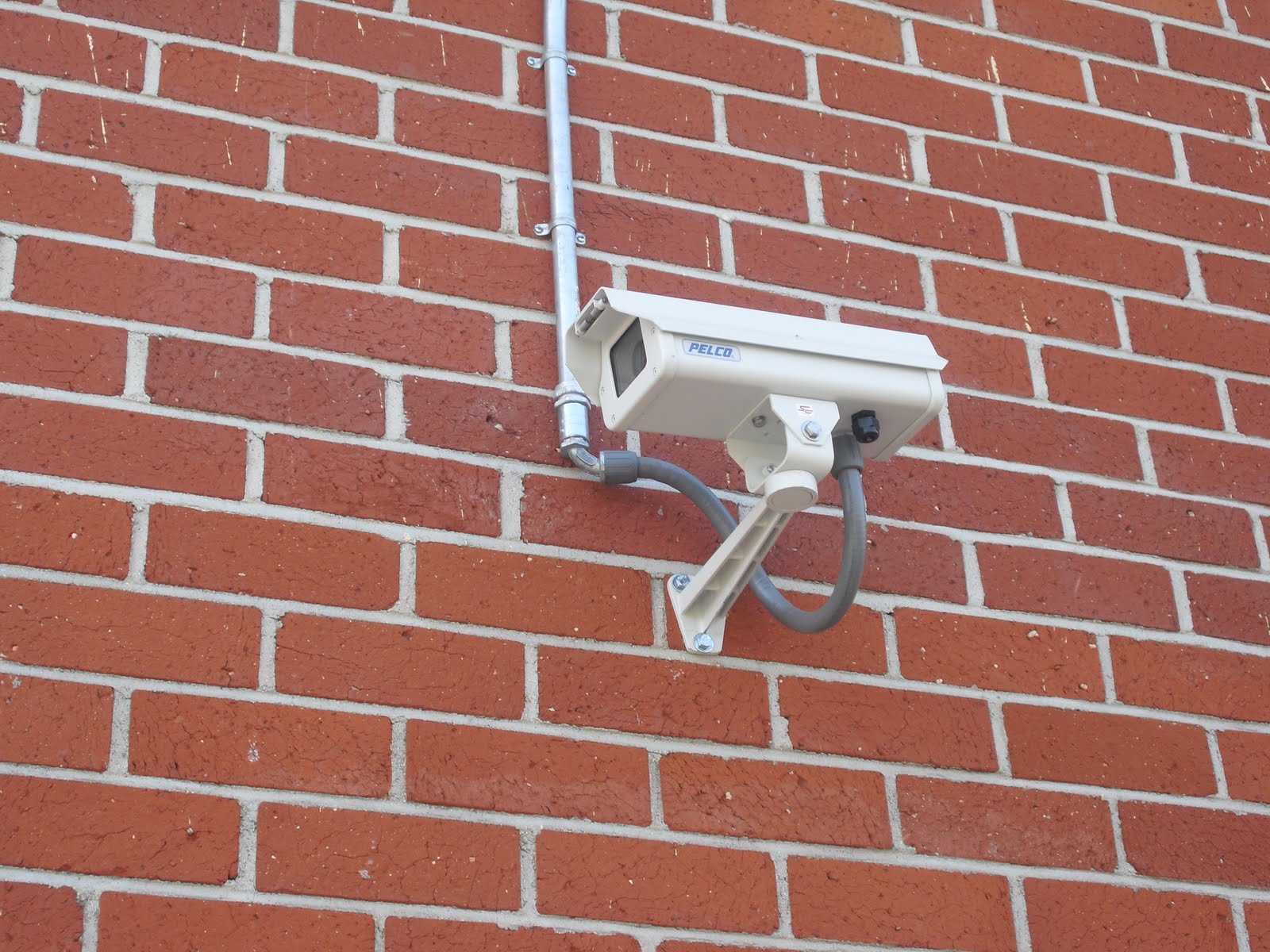
Among this, other teams have had to fight to remain a group. Last year the tennis teams were forced to unite and help bring to Mr. Fasting’s attention the importance of tennis at the school. In response he claimed the team had forfeited the majority of their games. I had gone to many of their games and was outraged at these lies, and after a petition and a parent meeting he reinstated the team. Throughout this time Mr. Fasting decided to remain blissfully unaware that both the male and female teams have members which are on the schools top ten even number one of both the senior, junior and sophomore classes. The money which should have been divided equally was then funneled into the football team which has a coach for every two players. The school has also added several security cameras which I presume are used to identify cannabis users. These cameras exemplify how the school has used money ineffectively.

Above all, I would like to see the money used for more productive means by first tackling the necessities rather than the more costly unnecessary things. For instance, everyday during class time you see students walking back to classes shaking their hands back and forth, but why? This is because there are currently no working hand dryers in male bathrooms and one (of many) in the girl’s restrooms. Another place the money could have been used is in the classroom where many teachers are forced to buy their own instructional materials such as printing paper (a teacher is given a limited amount of paper) and tissues. In my opinion money should be used for the basic things. Among this, schools funds should also be divided equally among the various sports rather than just the football team. In conclusion Pomona High School’s revenue should be used primarily for the necessities. Whoever is making the decisions on how the money is used should reevaluate and put it where it is most needed.

- Ruben Aguilar

Achieving the Balance

Don’t you want to have fun and be on top of your academic career in high school? Colleges and universities do want a well-rounded student for their campuses. Teachers should consider extending due dates or giving less homework. Ordinary students want to be successful in their academics and show their personality or passion for hobbies. Mr. Avila, my pre-calculus teacher, has a system which allows students to be involved in both academics and their outside hobbies. You are getting ready to go to a four-year college, and you need to start managing your time so you can get stuff done and maintain the other activities you may have outside class.
Being involved in extracurricular activities leads to a well-rounded student. Students have hobbies, for example, band, dance, football, tennis, volleyball, softball, or clubs such as math club, anime club, art club and others. The activities take time for the student who wants to be dedicated to their activities they enjoy. For example, dance takes practice to get a routine the right way. Also, band takes practice at least two times a week for at least 2-3 hours during the school since band has field shows, concert, school performances, and festivals. Having a strategy like Mr. Avila in which he gives homework on Monday which is due on Wednesday and homework on Wednesday which is due on Friday. This benefits the students since they can try doing the homework and develop questions or improvement in writing by spending more time with the homework.
Community service also shows character of a student. A student can either go help at a retirement home, volunteer in an event, or help out a local charity event. At the end of the school day, students have multiple assignments from their classes, and then they wish to do community service or they have to go to a club meeting. What do they do now? Stay up all night? They need the hours of sleep so they can cooperate throughout the week. A situation similar to volunteering at an event can be possible with extended due dates or less homework. The student will gain work or volunteering experience, complete their homework on time, and do a better job on it.
The honor classes and AP classes students take lead them to a more strong college application. By taking the classes you can be more prepared for college. Extended due dates for homework for students who decide to take honor and AP classes can lead them to managing their time by making a calendar of assignments and leaving  procrastination behind. This prepares them for the future. Each of the classes a student decides to take, from AP courses, like AP calculus, biology, chemistry, physics, Spanish or English, give a certain assignment and expect it to be done the next day. Many teachers have a specific system they follow and they are strict on their expectations.
If a student takes time to do a little the first day, for example, English, a draft the first day and go over it again, it can be more helpful and beneficial to the student. In the end, you have a better outcome. For example, Mr. Avila has noticed students turn in their homework more frequently, and he states it gives them time to develop any questions.
For example, in English class most of the time, students lie or make up ideas in their essay or analysis because they want to get it in before the short deadline. They get hideous grades because they do not have enough time to complete it correctly.
Michelle Flores, a Pomona High School student has an opinion on the topic to extend the deadline of homework. She states, “There are students that are gong to take advantage of it and others will still do it at the last minute.” Flores also states it can help students, “in taking their time on writing papers and gathering out thoughts to write an analysis or an essay and rewrite,” and for history students, “can go back and reread the chapter and so the student can understand the material well and the teachers can be fair and give a test.”
By performing a system similar to Mr. Avila, teachers can get better results on the AP exams or any other final. Students will have the time to get their writing done correctly with more revision, understand the material well, develop questions, and have time to do extracurricular activities. This will have longer effects in the students’ near future. They have to learn to manage their time which will be expected in college with classes, bills, part-time jobs, and career meetings.


-Zenia Gante

America's New Epidemic: High School Dropouts

As if it is not bad enough that the country is in the middle of the biggest economic slump since the Great Depression, there is a new crisis arising in the United States. An alarming rate of high school students are dropping out. Currently only half are graduating from high schools in major cities. This increase in our nation’s dropout rate would only mean an increase of young adults who aren’t prepared not to mention fit for a job which minimum requirement is a high school diploma. In 2002, George W. Bush’s Administration passed the No Child Left Behind Act. It failed, not addressing the issues communities faces as more students continue to walk away from their educational pathways.
           
     The dropout rate is increasing exponentially in this country and we need to put a stop to it. From gathered sources the main reasons why teens drop out of high school are: personal family circumstances, like family financial status, teens that fall so behind they give up on their education because of prior negligence, teen age pregnancy, and lack of interest and motivation. Across the nation communities are being negatively impacted by the growth of these numbers coming from a person who sees it everyday.
           
         In a recent interview conducted with Mr. Avila, a mathematics teacher at Pomona High School, regarding the effect of high school dropouts in a community said “Its (high school dropout) a vicious cycle that is hard to break. Then poverty, crime, these things do not reflect well on the community. I think by helping the community as a whole, dropout rates would decrease.” Mr. Luis Avila himself, faced his own hardships in his life coming to the United States at the age of 15 speaking little to no english. He graduated from Pomona High School thus went on to Mt. San Antonio College to earn his degree in mathematics. 
        
        The No Child Left Behind Act failed to address some of the needs communities face, as students continue to drop out of high school. This act should be administered through more of a state or local based level, maybe look into the differences of varying areas. State and local communities suffer when they have lass educated populances, and these entities would spend more on educational programs or federal aid once these teenagers reach adulthood. When a student decides to drop out of high shoool, everyone is affected the student, the school, the parent, and essentially the community for letting this happen.
          
         As a high school student myself, I see the impact of high school dropouts have on our community. As time passes, there are more and more unoccupied desks in our classroom or as you move in advance curriculum. How can the district let this happen, these teens need to stay in school! It hurts me to see every year my class size become smaller and smaller. Students need motivation from parents, teachers, and counselors, and only then will they value the true meaning of an education. These children will be our future, whether we like it or not, they are the next workforce of America and we must prepare them to do just that.


-Samantha Hernandez

Teenage Mothers: Education at a loss

  Teenage pregnancy is a struggle many people have to confront whether it is in their family or in their school. Having to face the reality of teenagers not using protection when having sexual intercourse, can be a true eye opener to others. Parents and teachers need to be the main educators for teenage girls and boys about the practice of safe sex and the consequences of not using protection, but teenage pregnancy has grown in the schools lacking sex education classes. By not providing these means of education to girls, as well as boys, commit the same mistake by not using protection.

            I, myself, have seen this in my own family on my mothers’ side. My cousin, who is now 23, has two children of her own-one of which she gave birth to when she was seventeen. Her strict family was disappointed in her and felt remorse towards having the child. As she grew, they gave her financial as well as emotional help to make sure she and her son were taken care of. While interviewing her, she had to reflect on how her life was like by not completing high school or entering college. As she thought of these things, she was content for the fact that she now has a loving family that accepts her and forgives her for her past mistakes.

            Many young teenage girls might have gone through what my cousin had to face in order for them to be forgiven by their family and accepted for what they have done. Although my cousin did not go to college because of her son, many young women do get back on their feet and finish their education with the help of their family or with the help of the government. Those who do not attend college or even finish high school do not get their full education meaning they have less of an opportunity to get a better career. Teenage mothers are often pressured to leave their education and care for their child which in return makes the mother seek out help by herself.

In the point of view from the mother of the teenager, their emotions are quite different. Interviewing my cousins’ mother, she had mixed feelings towards her daughter having a child at such a young age. She felt upset that her daughter had unprotected sex but was relieved she did not abort him. This is typical with the mothers of teenage women where they feel upset and anger towards their daughter dropping out of high school and having unprotected sex. Mothers agree it is because of the lack of sexual educational classes they offer to them. If they were to be more educated about using protection, then there would be a less chance of tem to drop out of high school.

To the teenage mothers who do stay even though they have a child, it is possible for them to get a higher education and reach their goals. There are schools which can help them finish their education not many mothers know about because of the lack of resources. Schools such as Silver Springs High School, here in California, is an alternative high school for pregnant and parenting teens, the aesthetic is the same as a typical high school but has others who share the same experience of being or becoming a mother. It allows them to finish high school with full credit and go on into college for further education. Schools like this help the drop out rate stay low while giving them a chance to enter a college. It also encourages them to stay on task and finish high school even though they have a child.

Stephanie Cortes